
Экосистема и реликтовый культурный пейзаж Лопе-Оканда
Ecosystem and Relict Cultural Landscape of Lopé-Okanda
Mixed
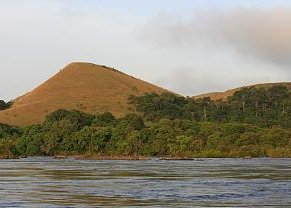
Изображение из Википедии
Об объектах
Экосистема и реликтовый культурный пейзаж Лопе-Оканда представляет собой необычное сочетание густого и хорошо сохранившегося влажного тропического леса и реликтовой окружающей среды саванного типа, которое служит местом обитания большого разнообразия видов, включая исчезающих крупных млекопитающих. На примере этого объекта можно наглядно проследить экологические и биологические процессы адаптации видов и мест обитания к климатическим условиям, сложившимся после ледникового периода. Этот ансамбль, объединяющий поселения, датируемые неолитом и железным веком, и включающий остатки наскального искусства, отражает историю важного миграционного пути народа Банту и других народов Западной Африки, проходившего по долине реки Огове в направлении к северу от вечнозеленых лесов Конго и к центру, востоку и югу африканского континента. Эти миграционные потоки предопределили развитие всей Африки к югу от Сахары.
Выдающаяся универсальная ценность на английском
The Ecosystem and Relic Cultural Landscape of Lopé-Okanda represents an unusual interface between dense and well conserved tropical rainforest and relict savannah environments. A greater number of threatened species of large mammals find their last refuge in Lopé-Okanda than in any other comparable rainforest area in the Congo Rainforest Biogeographical Province. The property also preserves a record of biological evolution over the last 15,000 years of the still extant rainforest-savannah transition zone. The Lopé-Okanda National Park displays remarkable evidence for settlement stretching over 400,000 years from the Palaeolithic, through the Neolithic and Iron Age, to the present day Bantu and Pygmy peoples. The National Park includes the River Ogooué valley, one of the principle migration routes for the diffusion of people and languages, including the Bantu, to Central and Southern Africa, in the Neolithic and Iron Age, as evidenced in extraordinary number of substantial settlements sites and an extensive collection of rock art petroglyphs. The Lopé-Okanda National Park provides the oldest dates for the extension of the Tshitolien culture towards the Atlantic and it has revealed evidence of the early domestication of plants and animals and the use of forest resources. Criterion (iii): the rich archaeological ensembles of the middle stretches of the River Ogooué Valley demonstrate 400,000 years of almost continuous history. The archaeological sites have revealed the earliest date for the extension of Tshitolien culture towards the Atlantic, as well as detailed evidence for the early use of forest produce, cultivation of crops and the domestication of animals. Criterion (iv): the collection of Neolithic and Iron Age sites together with the rock art remains appear to reflect a major migration route of Bantu and other peoples along the River Ogooué valley to the north of the dense evergreen Congo forests from West Africa to central east and southern Africa, that has shaped the development of the whole of sub-Saharan Africa. The subsidiary Iron Age sites within the forest provide evidence for the development of forest communities and their relationship with present day peoples. Criterion (ix): The nominated property demonstrates an unusual interface between forest and savannah environments, and a very important manifestation of evolutionary processes in terms of species and habitat adaptation to post-glacial climatic changes. The diversity of species and habitats present are the result of natural processes and also the long-term interaction between man and nature. Criterion (x): The diversity of habitats and the complex relationship between forest and savannah ecosystems have contributed to a high biological diversity particularly in relation to the property's flora, making it one of the most outstanding areas in relation to floristic diversity and complexity in the Congo Rainforest Biogeographical Province. Over 1,550 plant species have been recorded, including 40 never recorded before in Gabon, and it is anticipated that once all the floristic surveys and research are completed the number of plant species could reach over 3,000. The property is of sufficient size to maintain the long-term ecological viability of its habitats and ecosystems. The conservation and management of the property is guided by a management plan for the period 2006-2011 which is supported by international cooperation, particularly through a number of international and national NGOs. Conservation and management of the property also benefits from a number of transboundary cooperation initiatives. Key management issues include the need to resolve conflicts from competing interests, and to raise awareness amongst local people on the importance of conserving this property and to involve them in its management. Control and regulation of commercial poaching is of priority as well as the need to fully enforce regulations banning commercial logging within the property. Additional financial, logistical and human resources need to be obtained to ensure the effective management of the property and its buffer zone. The authenticity of the archaeological sites and rock art site is intact. There is a need for consolidation of the excavated sites to be carried out to ensure that they are not eroded by natural or human processes. The integrity of the cultural sites lies mainly in their relationship to one another along the River Ogooué Valley corridor which facilitated waves of migrations and subsidiary, later archaeological sites which fan out along the lesser river valleys within the forest. It would be desirable if at some point in the future that part of the river valley between the north-west corner of the National Park and the historic ensemble to the north-west could be included so that the integrity of the river corridor as a whole could be protected. The legal protective measures for the property are adequate to protect the cultural attributes of the landscape. Without a mission to the main archaeological sites in the River Ogooué Valley, details of the state of conservation of the cultural property cannot be recorded. Currently there are no active conservation measures undertaken on the archaeological sites. Although many of the sites are remote and this remoteness will help provide good protection, it would appear that over time consolidation and remedial work will be needed. High priority should be given to putting in place one or more staff with appropriate training for archaeological sites and cultural landscapes.
More from Africa


Discussion
Войдите, чтобы присоединиться к обсуждению
Войдите, чтобы комментироватьКомментариев пока нет. Поделитесь мыслями первым!
Отметьте своё посещение
Войдите, чтобы отмечать свои посещения
ВойтиСообщество
0
Лично
0
Виртуально
0
Хочу поехать